Brands must invest in AI, before ad-supported models start coming in: Navin Khemka, WPP
Navin Khemka, President, Client Solutions, WPP Media South Asia, says marketers must look beyond reach and active choice to build long-term memory structures
 by
by
Published: Aug 26, 2026 9:25 AM | 10 min read
 Follow Us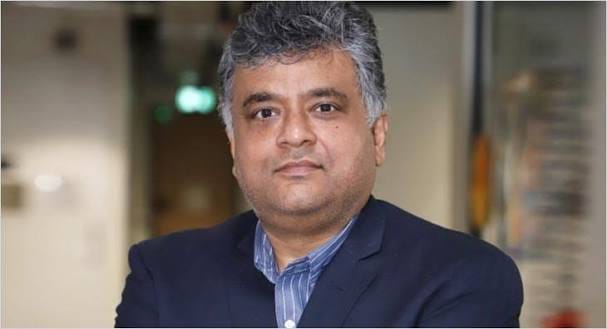

- AI platforms are transitioning from productivity tools to consumer companions, with OpenAI and Google testing advertising formats in their AI systems, indicating a potential new media channel for brands.
- Industry experts emphasize the importance for brands to establish visibility and credibility in AI-led discovery before paid advertising becomes mainstream, as consumer behavior is increasingly influenced by AI recommendations.
- A study highlights that 84% of purchases are made based on prior brand preference, underscoring the need for brands to build lasting memory structures rather than focusing solely on immediate sales tactics.
- As the advertising landscape evolves, brands are encouraged to integrate their marketing strategies across various channels and platforms to maintain relevance and consumer trust in a competitive market.
As AI moves from a productivity tool to a consumer companion, increasingly influencing how people discover, evaluate and choose brands, GenAI platforms are moving to monetise AI-led discovery.
OpenAI began testing ads on ChatGPT in the US in February 2026 and has since expanded the pilot to 31 European countries, signalling AI’s emergence as a potential new media channel. Google, too, is testing Gemini-powered ad formats in AI Mode and Search, with ad placements within Gemini targeted for rollout in 2026.
While AI advertising remains a small share of the global ad market, even a modest share of search and discovery could trigger significant shifts in marketing budgets, expected to cross Rs 2 lakh crore in India and $1.3 trillion globally by year-end. “For brands, the imperative is to build visibility and credibility in AI-led discovery before paid advertising on these platforms becomes mainstream”, says Navin Khemka, President, Client Solutions, WPP Media, South Asia, in an exclusive interaction with exchange4media on Tuesday.
Khemka believes brands cannot afford to wait for AI platforms to fully develop their advertising models before figuring out how they will be discovered within these ecosystems. “Unlike traditional interfaces, AI can converse with consumers at their own level, understand their language and increasingly influence what they discover and consider,” he noted.
“It is clearly going to start influencing what people discover, what it starts recommending to you, what it throws up,” Khemka says. “Subtly, those things will start becoming very, very relevant in terms of the path in which the AI leads you into a brand, or a product, or a service.”
That makes AI visibility a strategic imperative rather than a future-facing experiment. “Getting your AI narrative right for a brand, and how you're showing up in the AI search, is becoming extremely critical,” he says. “Brands should be mastering it like yesterday.”
And his advice to marketers is particularly direct as AI platforms build advertising businesses: “Brands have to be investing ahead of the curve, before the paid option also starts coming in.”
Khemka says the industry is still in the early stages of understanding how advertising will eventually work within AI environments. He explains, “It's really early days right now. Brands have to get the way they show up, or the way AI is recommending them, or the way AI understands them in the right shape and form. The rest — ad format, ad-led, non-ad-led — I think all that will follow eventually.”
The risk of waiting, he argues, is not simply losing a new media opportunity, but losing consumer trust and consideration. “Brands have to be investing ahead of the curve... Otherwise, they will lose out on consumer trust, consumer recommendation, consumer lean-in or consumer buy-in,” he says.
The 84% problem: Why brand memory matters
The AI opportunity also reinforces Khemka's larger argument that marketers need to move beyond the obsession with the final moment of purchase.
WPP Media's How Humans Decide study, conducted last year with the University of Oxford's Saïd Business School and based on 1.2 million purchase journeys, found that 84% of purchases involve consumers choosing brands they are already biased towards. Only 16% of purchases are therefore open to influence through lower-funnel marketing.
In other words, more than eight in 10 purchases are going to brands that have already established a degree of preference before the consumer enters the active shopping journey. WPP Media's subsequent analysis describes this as “brand priming” — the cumulative effect of experiences that create a measurable bias towards particular brands.
That finding provides the context for Khemka's argument that the industry has become highly efficient at targeting consumers at the point of active choice, but risks underestimating everything that happens before it.
“We know exactly when the person is searching for you, we know how to target the ad, we know how to serve the impression,” he says. “But that's only a part of how consumers make purchase decisions. Over 84-85% consumers take decisions through passive influence built through past experiences and the memory structures a brand creates over time.
“That means it is very, very important to build memory structures that last, rather than short-term optimisation of media plans,” Khemka says. The finding is particularly relevant as AI becomes part of the discovery journey. If consumers increasingly turn to AI to narrow their choices, brands may need to have already established sufficient salience and relevance to make it into that consideration set in the first place.
From reach to influence
The shift is also changing what clients expect from agencies. In an uncertain economic environment, Khemka says marketers are increasingly focused on one question: how does media contribute to growth?
“Client expectations today are only about sustaining growth — sustaining growth, and obviously at a slightly more efficient cost,” he says. With input costs rising and consumers becoming more cautious, growth can no longer be reduced to reaching a defined target audience.
“Growth today has become so important in this era of uncertainty,” Khemka says. “Growth is no longer just about reaching the right audience.” The industry, he argues, has become highly efficient at capturing consumers at the point of active choice — when they are searching for a product, comparing options or demonstrating purchase intent.
“But that's only a part of how people make decisions,” he says. This is pushing measurement from outputs to outcomes. “All the metrics are already moving from output, which is reach, frequency and all, to outcomes,” Khemka says. “What is the outcome of my business?”
For that outcome, he argues, whatever mix of interventions and memory structures is required must be built over time. “There could be some short-term solutions, but there needs to be a long-term strategy.”
Why brand building is back at the centre
The rise of quick commerce and retail media, ironically, is making brand memory more important rather than less.
“When you want something in 10 minutes, you're not there to explore a brand and decide which one to buy,” Khemka says. “You already know which brand you want to buy.” That makes being top-of-mind — and being part of the consumer's consideration set — critical even when the final transaction happens on a performance-led platform.
“It's very important to build the memory structures, to be top of mind, to be there in the consideration set, at least, to be able to secure the sale,” he says. Khemka defines a memory structure as the brand ethos or relevance built in a consumer's mind over time through exposure and interactions across different touchpoints.
“For a financial brand, the memory structure that a financial brand needs to build is that of trust,” he explains. “If I'm placing my hard-earned money with this financial institution or this financial product, then I trust this brand that they will take care of my money and help it grow.”
The implication is that brands cannot rely on transaction-led environments alone to build long-term growth.
Integration becomes the agency's biggest test
Yet building those memory structures is becoming harder as consumer attention fragments across an expanding number of platforms. “The biggest challenge before agencies today, I would say, is about integrating all of this together,” Khemka says.
The old agency model, where different specialist teams operated largely within their own disciplines, is becoming increasingly difficult to sustain. “It is very, very important for an agency to play the orchestra,” he says. “One person should direct the entire orchestra to be able to produce the music which finally results in growth for the brand.”
That integration now has to encompass creative, media, data, technology, commerce and production. “Creative, media, data, technology, commerce, production — they cannot operate in different, separate disciplines,” Khemka says. “Shared, owned and earned media therefore need to work together to create and reinforce what we are calling influence.”
This also underpins WPP Media's Open Intelligence approach, which Khemka says combines signals across creative, media, and data to target the right consumer at the right time.
The rise of ‘local intimacy’
The integration playbook is also changing how brands approach India's cultural complexity. Khemka cites Thums Up's IPL strategy as an example of moving away from conventional sports sponsorship towards creators and communities.
“Traditionally, we would look at very, very strong sponsorship buying on cricket,” he says. “But this time, we did not rely on the official IPL sponsorship. Instead, we actually pivoted into creators and communities, and obviously looked into gully cricket as a huge cultural moment.”
The campaign, he says, generated over 248 million reach, 15 million engagements and more than 390 million views. “The larger lesson is that brands can create disproportionate impact when they identify and participate in the cultural systems already influencing people,” he quips.
Khemka calls this approach “local intimacy” — identifying the right community in the right geography and activating it in the right way. “Local intimacy is absolutely a growth advantage,” he says. “Growth can be shaped by local culture, communities, behaviour, consumption, and so on.”
Retail media's next challenge
The same tension between short-term performance and long-term brand building is emerging in retail media.
Khemka describes India's retail media market as still being in its “nascent stages”, with commerce platforms increasingly becoming important discovery engines for both established and emerging brands.
The attraction is obvious: platforms can directly demonstrate sales generated by advertising. “Here is a platform where you're able to prove to the brand that this is the amount of sale that I have done for you,” Khemka says. “And therefore, you are able to also command a share of that sale into advertising.”
But he believes the model will eventually confront a growth ceiling if brands rely too heavily on the same consumers and geographies. “When stagnation starts happening, on the same PIN code, at the same geography, and when more consumers don't happen, or more number of new consumers don't come in, brands will also understand the importance of the memory structure that you've built for the brand,” he says.
“The long-term brand winner will be somebody who is building the memory structure, but also there across all forms of distribution channels.”
In a country as diverse as India, he argues, e-commerce cannot become a substitute for broader distribution and brand presence. “You have to be omnichannel, available across platforms, across channels, to be able to become a large brand in a country as diverse as India,” he says.
The festive quarter
Khemka expects this festive season to become particularly important for brands looking to recover lost momentum.
He describes the current quarter as a difficult one, following a stronger first half supported by major sporting events including the ICC tournament and IPL. “We had a good H1, because of two big events happening, both ICC and IPL, in the same year,” he says. “By that time, the geopolitical tension was not there and things were looking far better. And then came this entire input cost rising because of oil prices, and input costs rising, slowing down. So we had a very, very tough Q3.”
He sees the festive period as a potential recovery window, helped by delayed launches across categories including automobiles, real estate, e-commerce and smartphones. “I am very, very hopeful that whatever we lost in this quarter... will actually come back from the middle of September to the end of November,” he says.
For brands, however, simply increasing media spends may not be enough. “Companies have to give the growth impetus, have some great promo offers, festive offers that we call, and get the interest back and the sale back,” Khemka says, as he remains hopeful of a strong festive season.
Read more news about Marketing News, Advertising News, PR and Corporate Communication News, Digital News, People Movement News
For more updates, be socially connected with us onInstagram, LinkedIn, Twitter, Facebook, YouTube & Google News